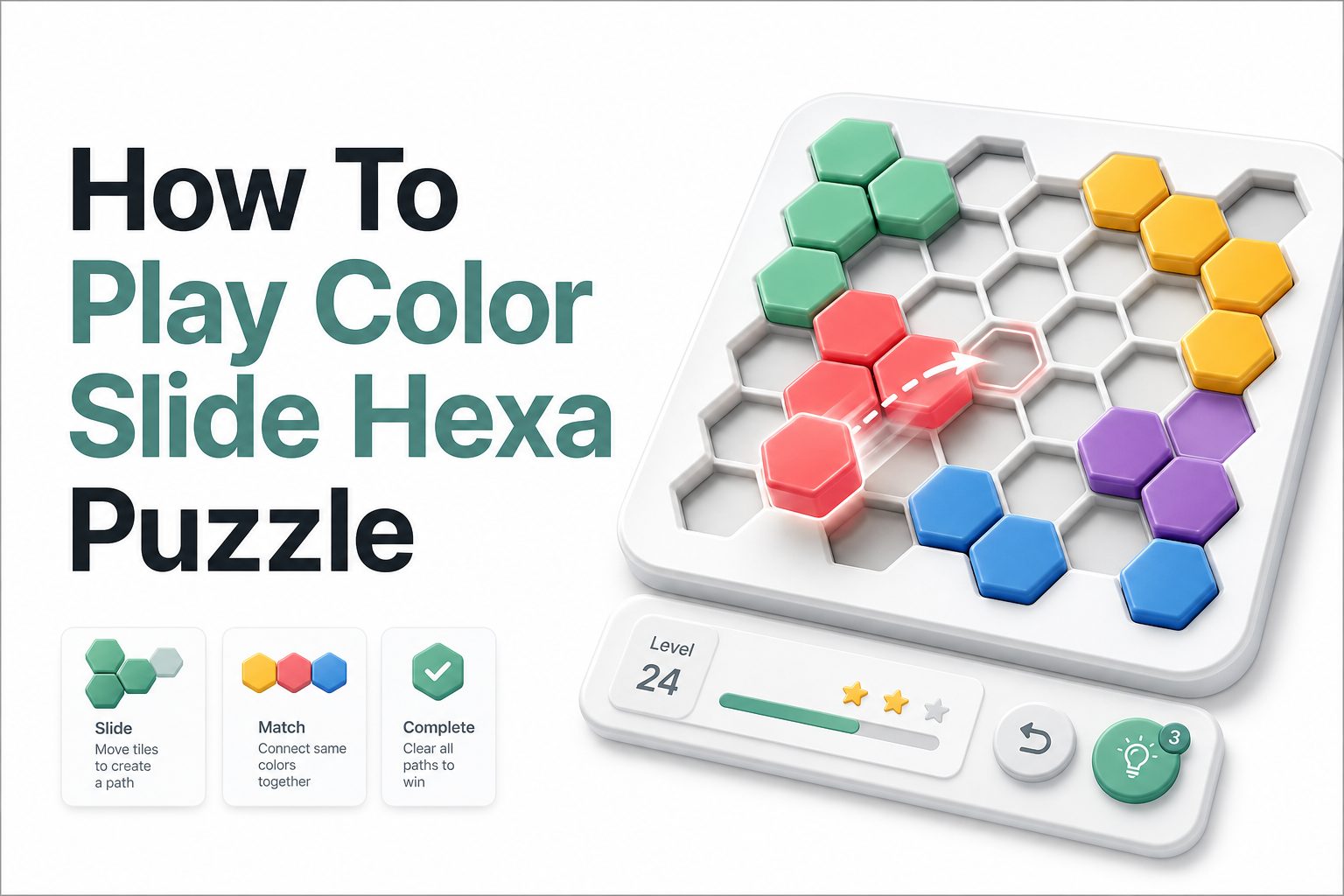
Color Slide Hexa Puzzle is a bright, logic-based puzzle game built around sliding hexagonal pieces into useful positions. The goal is usually to connect matching colors, clear groups, complete patterns, or arrange tiles within a limited board space.
The hexagon shape makes the game feel different from standard square-grid puzzles. Each tile can connect across several sides, so every move affects more nearby spaces than players may expect at first.
Learning how to play color slide hexa puzzle starts with reading the board calmly. Instead of moving the first tile that looks useful, strong players compare color groups, open paths, blocked spaces, and future moves before sliding.
Game Basics
A typical Color Slide Hexa Puzzle board contains hexagonal cells arranged in a compact pattern. Some cells hold colored tiles, while others remain empty so pieces can slide into better positions during play.
The main action is simple. You slide tiles along available paths, place matching colors near each other, and create groups or completed patterns based on the game mode. The challenge comes from limited space and connected movement.
Because the board uses hexagons, each piece may touch more neighbors than it would in a square puzzle. This gives players more options, but it also makes careless moves harder to repair later.
Quick Player Notes
- Focus on matching colors, not only moving tiles.
- Keep at least one open lane for future slides.
- Avoid trapping single tiles in corners too early.
- Build larger groups before making small clears.
- Watch how one move changes several nearby cells.
- Use empty spaces as tools, not as random gaps.
Main Objective
The main objective depends on the version of the puzzle, but most Color Slide Hexa Puzzle games reward clean color matching. You may need to connect same-colored tiles, fill target spaces, clear clusters, or complete a full board pattern.
At the start of each level, look for the target shown on the screen. Some levels ask for a specific number of color matches, while others require all tiles to be arranged correctly before you can move forward.
A good internal resource to pair with this guide is color puzzle strategy guide. It can help players improve board reading, color grouping, and move planning across similar puzzle games.
Board Layout and Hexa Movement
The hexa board changes how players think about space. A hexagon can connect along six sides, so a tile may become part of several possible groups. This creates more flexible routes and more chances for clever combinations.
Movement is usually restricted by occupied cells, walls, fixed pieces, or the edge of the board. A tile can slide only when a legal path is open, which makes empty spaces valuable throughout the level.
Beginners often focus on the tile they want to move, but the empty cell is just as important. Treat the empty space as the engine of the puzzle because it creates room for every useful slide.
Basic Move Rules
- Slide tiles only through open paths.
- Match colors by placing similar tiles together.
- Check whether fixed blocks limit movement.
- Use corners carefully because they can trap pieces.
- Keep central spaces flexible when the board is crowded.
- Plan around the next two or three slides whenever possible.
Step by Step Play Method
Start each level by scanning the full board. Identify the largest color groups, the isolated tiles, and the empty spaces. This quick scan gives you a practical route before you start sliding pieces.
Next, choose one color group to improve first. Move nearby matching tiles toward that group while keeping enough open space around it. Large groups usually give better progress than scattered small matches.
After each move, pause for a moment and check the new layout. A move that looked useful may block another path, so reviewing the board after every slide keeps the level under control.
Color Matching Strategy
Strong color matching begins with grouping tiles in the most active area of the board. The center often gives more movement options than edges, making it easier to join colors without trapping pieces.
Try to build one strong group at a time. If you chase every color at once, the board can become crowded and messy. A focused approach helps you clear space and create better routes.
When two colors compete for the same lane, give priority to the color with fewer available moves. Flexible tiles can wait, but trapped tiles often become the reason a level fails.
Smart Color Priorities
- Move blocked colors before free colors.
- Join nearby matches before chasing distant ones.
- Keep rare colors visible and reachable.
- Avoid breaking a strong group without a clear reason.
- Use the center for active movement.
- Save corners for pieces that already belong there.
Planning Ahead
Planning ahead means thinking beyond the current match. Before sliding a tile, ask where the empty space will land, which paths will open, and whether the next color can still move afterward.
Many levels become easier when you imagine two moves in sequence. First, move a tile to create room. Second, use that room to place the target color. This simple habit prevents random sliding.
A useful internal read for players who enjoy logic games is hexa puzzle tips. It supports the same type of calm planning used in Color Slide Hexa Puzzle levels.
Common Beginner Mistakes
One common mistake is moving tiles into corners too early. Corners can be useful final positions, but they offer fewer exit routes. A tile placed there without purpose may block progress for the rest of the level.
Another mistake is clearing small groups too quickly. Small clears can feel satisfying, but they may remove helpful structure. Sometimes a larger group is only one or two slides away and gives better board control.
Players also lose levels by ignoring the empty spaces. If every open cell ends up in a weak position, the board becomes stiff. Keep open cells near active colors whenever possible.
Mistake Fix Checklist
- Do not rush the first possible match.
- Keep corner moves purposeful.
- Protect open lanes through the board.
- Move isolated tiles before they become stuck.
- Avoid spreading one color across opposite sides.
- Review the target before committing to a long sequence.
Using Empty Spaces Well
Empty spaces are not wasted cells. They are the main way to control movement. A well-placed empty space can help shift a whole line of tiles and bring a trapped color back into play.
Try to keep at least one open space near the center during difficult levels. Central empty spaces usually touch more routes, which makes them more valuable than open cells trapped on edges.
When the board feels blocked, move the empty space first instead of forcing a color move. Creating a better gap often gives you more useful choices on the next turn.
Advanced Positioning
Advanced players think in zones. They may keep one side of the board for completed colors, one side for moving tiles, and the middle area for temporary rearrangement. This prevents finished work from being disturbed.
Another useful tactic is staging. Place a tile near its final group before making the final slide. This reduces the number of risky moves needed when the board becomes crowded.
You can also use blocking intentionally. A placed tile can stop another tile from sliding too far, helping you land it in the exact cell you want. This works best when paths are straight and predictable.
Scoring and Level Goals
Some Color Slide Hexa Puzzle versions score based on moves, time, combos, or completed groups. If your version has move limits, every slide matters, and planning becomes more important than speed.
For timed modes, quick recognition matters. Focus on obvious groups first, then handle isolated pieces when more space is available. Fast play should still be controlled because panic moves usually create more work.
If the game rewards combos, delay small matches until several colors can connect together. Building a stronger setup may give higher points and leave the board cleaner after the clear happens.
Practice Routine
- Play slow levels first to build pattern recognition.
- Replay failed levels and find the blocking move.
- Practice keeping empty spaces near the center.
- Focus on one color group at a time.
- Track whether corner moves help or hurt.
- Review completed boards to see better routes.
Tips for Difficult Levels
Difficult levels usually limit space, add fixed blocks, or split colors across the board. Start by finding the most restricted tile. If that piece has only one useful route, solve around it early.
When colors are separated, create a path before moving the final tile. Sliding directly toward a match can fail if the route closes. Clear the route first, then bring the tile through smoothly.
If you feel stuck, step back and look for a tile that can move without harming the board. Small positioning moves often restore flexibility and reveal a better path.
Playing Without Wasting Moves
Move efficiency comes from purpose. Each slide should either create a match, open a lane, move a color closer to its group, or place the empty space in a stronger position.
Avoid moving the same tile back and forth unless you are deliberately repositioning the empty cell. Repeated reverse moves usually mean the board was not scanned carefully enough before starting.
A clean move plan often uses setup moves. These moves may not score immediately, but they place pieces where the next slide becomes obvious. Good setup is the difference between casual play and steady progress.
Best Habits for Steady Progress
Develop the habit of scanning from outside to center, then center to outside. This helps you notice trapped edge tiles and open central paths before making the first move.
Name the priority color in your head before you start a sequence. This keeps your plan focused and stops you from jumping between colors whenever a new match appears.
End each level by thinking about the move that helped most. This quick review builds pattern memory, so future levels feel more familiar even when the layout changes.
Helpful Controls and Settings
Many puzzle apps include undo, hints, restart, sound, and level selection. Use undo as a learning tool rather than a shortcut. It helps you compare two choices and remember which one caused trouble.
Hints can be useful when you are fully stuck, but relying on them too early slows skill growth. Try two or three planned sequences first, then use a hint to study the intended direction.
If the game includes daily challenges, they are useful practice because they usually introduce fresh layouts. A few daily levels can build better board reading without making practice feel repetitive.
Why Hexa Puzzles Feel Different
Hexa puzzles feel fresh because they create wider connection possibilities. A single tile can support several groups at once, and the direction of movement often feels less predictable than square-grid sliding games.
This wider connection system rewards calm thinking. Players who pause before moving usually find cleaner routes, while fast random sliding can quickly crowd the board and limit future options.
The best part is that improvement feels visible. After a few sessions, players start spotting blocked lanes, weak corner moves, and strong color groups much faster than before.
Conclusion
Learning how to play color slide hexa puzzle comes down to careful board reading, smart color grouping, and purposeful sliding. The game may look simple at first, but hexagonal movement creates many possible routes, traps, and setup choices.
Focus on open spaces, avoid early corner traps, and build larger color groups whenever the board allows it. With steady practice, each level becomes less about guessing and more about reading patterns with confidence.
FAQ
What is the goal of Color Slide Hexa Puzzle?
The goal is to slide hexagonal colored tiles into better positions so matching colors connect, patterns complete, or target groups clear. Each level may change the exact objective, so always check the goal before making your first move.
How do beginners get better at the game?
Beginners improve by slowing down, scanning the board, and choosing one color group to build first. Keeping empty spaces near active tiles also helps because it gives more movement options when the board starts filling up.
Why are corners risky in hexa puzzles?
Corners have fewer exit routes than central spaces, so tiles placed there too early can become trapped. Use corners mainly for pieces that clearly belong there or when the move helps complete a final pattern.
Should I use hints while playing?
Hints are useful when you are stuck after trying several planned moves. They work best as learning tools because they show the direction of a solution, but using them too quickly can reduce practice value.
How can I waste fewer moves?
Before sliding, check whether the move creates a match, opens a route, improves a color group, or places the empty space better. If it does none of these things, look for a stronger move first.
0 Comments